
TSI cuts vs. timber sales: which tool fits your woodlot?
Your forest is not standing still. Every year, trees compete for light, soil moisture, and space, and the ones that win that competition are not always the ones you want to win. Two of the most common tools a forester reaches for - a timber stand improvement cut and a timber sale - both involve removing trees, but they operate on different logic, produce different financial outcomes, and belong in different moments in a forest's life. Mixing them up, or choosing the wrong one for the situation, is a mistake that comes up again and again among landowners who are new to active forest management.
This post lays out what each tool actually is, why you would use one over the other, and how the decision plays out on the kinds of mixed hardwood and softwood woodlots common in Windham County.
What is a timber stand improvement cut?
A timber stand improvement cut - usually shortened to TSI - is silviculture with no expectation of net revenue. The goal is not to harvest value; the goal is to redirect the forest's growth energy toward specific trees you want to favor. You are essentially pruning the forest the way a gardener prunes a fruit tree: removing competition so the best specimens can put on more girth, better crown development, and higher-quality wood over the next decade or two.
In practice, TSI work often involves:
- Cutting or girdling low-quality "wolf trees" - large, spreading trees that hog crown space but produce poor timber - so that better-formed neighbors can expand
- Removing beech, which in much of Windham County is heavily infected with beech bark disease, to free up growing space for maple, yellow birch, or ash where those species can still thrive
- Releasing crop trees by cutting competing stems within a defined radius of each selected "leave tree"
- Cutting invasive woody shrubs like buckthorn or honeysuckle that suppress natural regeneration on the forest floor
TSI work typically generates little or no merchantable timber. You might create some firewood-sized material, but the stems you are removing are exactly the ones the timber market does not want - crooked, poorly formed, small-diameter, or diseased. That means the landowner usually pays for TSI labor rather than receiving a check. In Vermont's Current Use program, eligible forestry expenses like TSI can sometimes be documented within a forest management plan as required activities, which matters when a state forester reviews compliance.
What is a timber sale?
A timber sale is a commercial transaction. Mature or near-mature trees with genuine market value are identified, marked, and sold to a licensed buyer - typically a logger working with a mill. The forester marks the trees to be cut based on a silvicultural prescription: which trees to take now, which to leave as growing stock, and what the residual stand should look like afterward.
A well-designed timber sale accomplishes two things at once. It generates income for the landowner and it improves the stand - but it improves the stand by removing trees that have already reached their financial and biological maturity, not by removing poor-quality competitors the way TSI does. The logic is different: in a timber sale, you are harvesting trees that are ready, leaving behind a younger, vigorously growing stand. In a TSI cut, you are removing obstacles so that younger, better-quality trees can reach maturity faster and with higher value when they eventually are harvested.
Vermont requires that any landowner enrolling land in Current Use under the Use Value Appraisal program have an approved forest management plan on file with the Department of Forests, Parks and Recreation before any commercial harvest. If you are thinking about a timber sale on enrolled land, reading a timber cruise report first will help you understand the inventory data your forester uses to design that harvest.
The financial picture: who pays whom?
This is the clearest practical distinction between the two tools.
In a timber sale, the landowner typically receives money. The amount depends on species, log quality, volume, skidding distance to the landing, haul distance to the mill, and current market prices. Timber markets in Vermont fluctuate with lumber demand, mill capacity, and fuel costs, so there is no universal figure - a consulting forester can give you a realistic estimate once a cruise has been done.
In a TSI cut, the landowner typically pays for the work. Girdling, hand-cutting, or mechanically felling undesirable stems costs labor time. Sometimes a logger will perform TSI as part of a larger commercial harvest at no extra charge if there is enough merchantable volume to offset the work, but that is an arrangement to negotiate carefully upfront, not an assumption to make.
A practical note for landowners in towns like Newfane or Townshend: if your woodlot has not been touched in thirty or forty years, you may have a stand where commercial volume and TSI needs exist side by side. A forester can design a combined prescription - harvest the mature, marketable stems in one operation while the logger also takes out the junk wood nearby - so that the commercial revenue helps offset the improvement work. That kind of combined prescription requires careful marking and a clear written plan so the logger knows exactly what to cut and what to leave.
When TSI is the right tool
TSI makes sense when the limiting factor on your woodlot is competition, not maturity. Signs that TSI is the right call:
- You have a young stand (say, 20 to 50 years old) where merchantable size is still a decade or more away
- A few large, low-quality trees are shading out a healthy cohort of well-formed younger trees
- You have heavy beech component that is diseased and is crowding out more valuable species - the beech bark disease situation in Windham County makes this a common prescription across the region
- Regeneration on the forest floor is sparse because the canopy is too closed, and you want to admit more light without triggering a full harvest
- Your management plan calls for crop tree release as a scheduled activity
TSI is also appropriate when timber markets are poor. Rather than selling mature wood at a market bottom, some landowners choose to do improvement work during a down cycle and wait for prices to recover before scheduling a commercial harvest. This requires having the cash to pay for TSI labor, but it avoids locking in a bad price on high-quality timber.
When a timber sale is the right tool
A timber sale is appropriate when you have trees that are biologically and financially mature - meaning they are growing slowly relative to their value and younger competitors would benefit from the light and space that the mature trees occupy. Other indicators:
- A timber cruise shows significant volume of merchantable sawtimber or veneer
- Your oldest, largest trees are showing crown dieback or other signs of decline
- Your management plan identifies a harvest as an upcoming scheduled activity
- You need revenue to fund other land management activities - road maintenance, boundary line clearing, or TSI work in younger stands
- You want to shift species composition over the long run - for example, favoring sugar maple over striped maple by harvesting the taller overstory and then following up with TSI in the regenerating understory
For landowners in towns like Grafton or Halifax, where older second-growth stands are common, a timber sale may be overdue if no commercial harvest has occurred in several decades. An overripe stand does not just represent missed income - it can represent a deteriorating growing stock as older trees die without releasing the next generation.
The role of the forester in both cases
Here is something that surprises some landowners: a forester's job description is nearly identical whether the prescription is TSI or a timber sale. In both cases, the forester:
- Inventories the stand and understands what is there
- Develops a written prescription describing what should happen and why
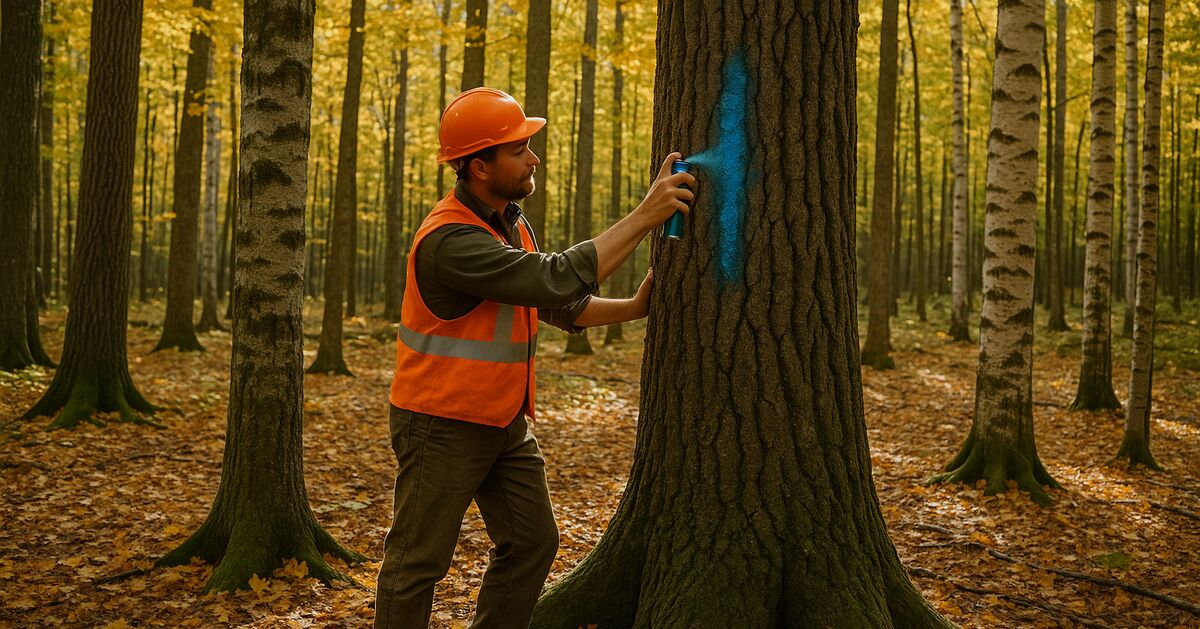
- Marks trees in the field - often with paint - so the logger or laborer knows what to cut
- Monitors the work during and after to make sure the prescription is followed
- Documents the activity for Current Use compliance if the land is enrolled
The difference is that in a timber sale, the forester also helps the landowner solicit bids, review contracts, and oversee the commercial transaction. That additional layer of work is one reason consulting foresters earn their fee on timber sales - they protect you from underselling your timber or from a poorly written contract that leaves you without recourse if damage occurs.
If you are enrolled in Vermont's Use Value Appraisal program, both TSI and timber sales need to align with your approved management plan. Vermont forest management plan amendments may be required if the work you are planning departs from what the plan originally described.
A common planning mistake to avoid
A mistake that comes up again and again in owner conversations is treating TSI and timber sales as interchangeable - as though any tree removal is roughly the same thing. The consequences of that confusion can be significant. A landowner who pressures a logger to "clean up" the stand by removing wolf trees and junk wood during a commercial harvest without specifying it in the contract may find that the logger focuses only on the merchantable stems (because that is where the money is) and leaves the improvement work undone. Conversely, a landowner who mistakes a need for TSI for a need for a timber sale may sell young, well-formed trees before they have reached their peak value, permanently reducing the woodlot's future productivity.
The fix is straightforward: get a forester involved before any trees are cut. The forester can tell you which tool fits the situation, write a prescription that combines both if needed, and mark the stand so there is no ambiguity in the field.
Landowners across our service area in Windham County - from Jamaica and Windham to Athens and Marlboro - are working with woodlots in every stage of development. There is no single answer that fits every property. What works for a 60-year-old northern hardwood stand on a south-facing slope in Grafton may be completely wrong for a 30-year-old mixed stand recovering from an ice storm in Wardsboro.
How Current Use enrollment affects the decision
If your land is enrolled in Vermont's Current Use program, both TSI and timber sales are legitimate forestry activities - but they must be consistent with your management plan and, in the case of a commercial harvest, the plan must be on file before the sale proceeds. Vermont's Department of Forests, Parks and Recreation reviews management plans, and using a TSI prescription to generate commercial revenue without proper documentation could create compliance issues, so check with your forester before mixing the two.
Our consulting forestry and current use forest management plan services are designed to make sure the work you do in the woods is properly planned, properly documented, and properly aligned with your enrollment obligations. If you have questions about where your woodlot stands, check our FAQ page or reach out directly - we are glad to talk through the situation before you commit to any particular course of action.
The right tool is the one that matches the biological condition of the stand and the goals you have for your land. That determination starts with walking the woods with someone who can read what the trees are telling you.
Sources & further reading
- Vermont Use Value Appraisal (Current Use) Program overview (Vermont Department of Taxes)
Revision history (1)
- Sep 15, 2026 - Pre-publish editorial QA: clean; claim audit: 3 claims, 1 rewritten
Claim-by-claim audit (3 checked)
- “Vermont requires that any landowner enrolling land in Current Use under the Use Value Appraisal program have an approved forest management plan on file with the Department of Fores…” (cited → tax.vermont.gov)
- “If your land is enrolled in Vermont's Current Use program, both TSI and timber sales are legitimate forestry activities - but they must be consistent with your management plan and,…” (cited → tax.vermont.gov)
- “Vermont's Department of Forests, Parks and Recreation reviews management plans, and using a TSI prescription to generate commercial revenue without proper documentation could creat…” (rewritten to what the article can stand behind)
Talk to a forester
Tell us about the land
Town, rough acreage, and whether the parcel is already enrolled. If you are working to a filing deadline, say which one and we will tell you honestly whether it is achievable.