
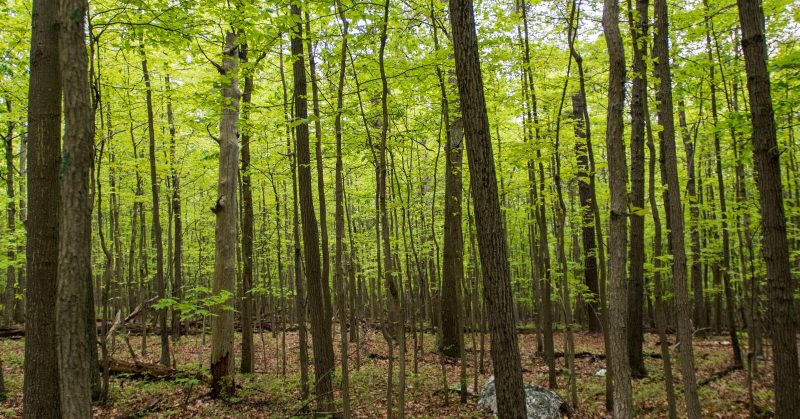
Our consulting forestry firm serves Halifax, Vermont landowners with professional forest management plans, timber inventory, and Current Use (Use Value Appraisal) enrollment services. We cover everything from initial site assessment and forest type mapping to written management plans that satisfy Vermont's Act 60 requirements, helping Halifax property owners manage their land wisely and reduce their property tax burden.
Halifax and the Land That Defines It
Halifax sits in the far southern tier of Windham County, bordered by Massachusetts to the south and characterized by some of the most rugged, deeply wooded terrain in the entire county. The town has no village center to speak of, only a handful of crossroads settlements, a strong sense of local independence, and an extraordinary amount of forested land relative to its population. Most Halifax residents live on large lots or multi-generational parcels that have been in families for decades, and the property lines here often run through stands of second- or third-growth timber that have been quietly maturing since the old farmsteads were abandoned a century ago. This is not resort country in the way that some nearby towns are, and that distinction matters for forest management: the landowners here tend to be serious stewards, not seasonal visitors looking for a scenic backdrop.
The terrain is steep, the ridgelines are sharp, and the hollows hold cold air and moisture in ways that directly influence what grows where. Northern hardwoods, red spruce, eastern hemlock, and yellow birch dominate the better sites. Sugar maples occupy the well-drained mid-slopes. Black cherry, which commands a premium in the timber market, appears with enough frequency that a thoughtful management plan can meaningfully improve its quality over time. Understanding these site-level differences is what separates a competent forest management plan from a generic document that could have been written for any town in Vermont.
Why Halifax Properties Drive Demand for Forest Management
Halifax landowners face a combination of pressures that makes professional forest management genuinely useful rather than a luxury. Property taxes in Vermont fall hardest on undeveloped land assessed at fair market value, and large forested parcels in southern Windham County carry significant assessed values. Vermont's Current Use program, formally the Use Value Appraisal program, offers a meaningful reduction in the appraised value of enrolled forestland, but enrollment requires a state-approved forest management plan prepared by a licensed consulting forester. That plan is not a formality - it must reflect actual site conditions, set realistic timber harvest goals, and be updated on a schedule that Vermont's Department of Forests, Parks and Recreation enforces. Halifax landowners who have enrolled without a genuinely site-specific plan sometimes find themselves out of compliance when inspectors visit, and that carries financial penalties.
Beyond taxes, the timber on Halifax land has real value that is often underestimated by owners who have not had a timber cruise performed in many years. Storms, including the ice storms and wind events that move through this part of Vermont with regularity, can shift the composition and health of a stand quickly. A stand that was primarily sawtimber-quality hardwood ten years ago may have shifted toward low-value species or damaged stems after a severe weather event. Keeping current with inventory allows landowners to make harvest decisions that improve long-term forest health and capture value before it deteriorates.
What Halifax Landowners Typically Call Us About
The most common starting point is a landowner who owns somewhere between thirty and several hundred acres of mostly forested land, is paying property taxes on all of it at fair market value, and has recently learned that their neighbor enrolled in Current Use and saw a significant reduction in their tax bill. They want to know whether their land qualifies, what the plan must contain, and how long the process takes. We walk through all of that in detail during an initial consultation - you can request a free consultation to start that conversation.
A second common situation involves inherited land. Halifax has a meaningful number of parcels that passed to children or grandchildren who live elsewhere and are only beginning to understand what they own. Timber may not have been touched in thirty or forty years. There may be logging roads that have eroded, old boundaries that have never been formally walked, or invasive species pressure along the edges. A forest management plan for inherited land serves multiple purposes at once: it establishes a baseline inventory, identifies the most pressing silvicultural needs, creates a defensible record of the forest's condition, and provides the framework for Current Use enrollment if the heirs decide to pursue it.
A third category is the landowner who had a plan written years ago and allowed it to lapse, or who purchased a parcel that came with an outdated plan that no longer reflects current conditions. Vermont does not allow enrollment to simply continue on an expired plan, and an inspection by the state can trigger a notice of noncompliance. Updating a plan for Halifax land requires a return visit to the property, a review of what has changed since the last inventory, and revised prescriptions that match where the forest is today. You can read more about what these plans involve on our services page.
How the Work Is Done Well in Halifax
Halifax's terrain creates real logistical challenges for forest assessment. Slopes are steep enough in many areas that getting to back corners of a property requires physical fitness and familiarity with the landscape. We do not perform desktop assessments or rely on GIS data alone. Every plan we write begins with a boots-on-the-ground cruise of the property, establishing sample plots distributed systematically across the stand types present, measuring basal area, species composition, quality class, and stocking. For Halifax properties with significant topographic variation, that means sampling separately on ridges, mid-slopes, and in the hollows, because those positions grow very different trees under very different conditions.
Access for timber harvesting is something we address explicitly in management plans for Halifax land. Many older logging roads have not been maintained and may not be suitable for modern equipment without improvement. We identify where roads exist, what condition they are in, and what the most practical extraction routes would be for any recommended harvests. Halifax's soils include areas with poor drainage in the lower elevations, and any timber harvest plan that ignores those conditions risks serious erosion damage that harms both the forest and the landowner's relationship with the state. Vermont's Acceptable Management Practices for Maintaining Water Quality on Logging Jobs apply to all harvests on enrolled land, and we write prescriptions with those standards built in.
What the Process Looks Like from Start to Finish
After an initial conversation - either by phone or through our free consultation page - we schedule a site visit to walk the property with the landowner. That visit typically takes a half day to a full day depending on acreage, and it serves two purposes: we gather the inventory data we need, and the landowner gets to show us what they care about, whether that is wildlife habitat, a particular viewshed, a sugar bush, or a section they want to leave unmanaged. Those priorities are reflected in the written plan.
After the site visit, we compile the inventory data, prepare species and stocking summaries, write the site history section, and draft management objectives and prescriptions. The plan goes through a review with the landowner before it is submitted to Vermont's Department of Forests, Parks and Recreation for approval. Approval is required before Current Use enrollment is finalized, and in our experience, plans that are thorough and site-specific move through the review process more cleanly than plans that read as if they were generated from a template.
Once approved, the plan is valid for a ten-year period, after which it must be updated. We track renewal schedules for our Halifax clients and reach out before plans expire so there is no lapse in enrollment. If a harvest takes place during the plan period, we document it in the plan record as required. For answers to common questions about timelines, fees, and what enrollment means for land use, our common questions page covers the ground we hear most often.
Mistakes to Avoid as a Halifax Landowner
The most consequential mistake is enrolling in Current Use without a plan that genuinely describes your land. Some landowners have received plans written without a site visit, containing generic language and species lists that do not match what is actually growing on their property. When the state sends an inspector - and they do inspect enrolled parcels - a plan that does not match site conditions creates problems that can result in withdrawal from the program and back taxes with interest.
A second mistake is timing a timber harvest without coordinating with the management plan. Harvests that take place outside the prescriptions written in an approved plan, or that are not properly documented, can trigger a finding of noncompliance. If you are considering selling timber or contracting with a logger, that decision should be made in consultation with your forester, not independently of them.
Why Halifax Landowners Choose Professional Help
The financial case for working with a consulting forester in Halifax is straightforward: the property tax savings from Current Use enrollment on a sizable forested parcel typically exceed the cost of the management plan in the first year or two of enrollment. Beyond the economics, the practical reality is that the state requires a licensed consulting forester to prepare the plan, and a plan prepared without genuine site knowledge is a liability rather than an asset. Halifax landowners who have worked with us consistently tell us that the site visit alone - simply having someone walk their land and explain what they are seeing - was worth the process regardless of the tax benefit.
Our work extends across southern Windham County, and Halifax sits naturally within the area we cover regularly. Landowners in neighboring towns are equally welcome, and you can see the full range of communities we work in on our areas we serve page. Whether you are starting from scratch or updating an existing plan, we are glad to help you understand what you have and what it can become.
FAQ
Questions about Halifax
- Does my Halifax land qualify for Current Use enrollment?
- Most forested parcels in Halifax of 25 acres or more qualify for Vermont's Current Use program, provided a state-approved forest management plan is in place. Halifax land is predominantly forested and typically meets the stocking and land-use requirements. We assess your parcel during a site visit and confirm eligibility before you commit to the plan process. Eligibility depends on actual site conditions, not just acreage, so a proper inventory matters.
- How long does it take to get a forest management plan approved in Vermont?
- For Halifax landowners, the process from initial site visit to state approval typically runs two to four months, depending on the complexity of the property and the current review workload at Vermont's Department of Forests, Parks and Recreation. Properties with multiple stand types or complicated ownership histories can take longer. We submit thorough, site-specific plans that tend to move through review without requests for revision, which keeps the timeline as short as possible.
- My Halifax land hasn't been logged in over 30 years. Do I still need a management plan?
- Yes, and in some ways unmanaged Halifax land benefits most from a current plan. After three decades without intervention, stands may be overstocked, contain significant volumes of low-quality timber, or have species composition that has shifted away from high-value trees. A management plan establishes exactly where the forest stands today, identifies the most productive next steps, and provides the framework for Current Use enrollment so you stop paying taxes at full assessed value.
- What happens if my existing Current Use plan for my Halifax property has expired?
- An expired plan puts your enrollment at risk. Vermont requires active, approved management plans for all enrolled parcels, and an inspection finding an expired plan can result in a noncompliance notice, temporary withdrawal from the program, and potential liability for back taxes with interest. We can update your Halifax plan with a return site visit, revised inventory, and updated prescriptions. It is far less costly to renew proactively than to address a compliance problem after the fact.
- Will a timber harvest on my Halifax land affect my Current Use enrollment?
- A properly documented harvest conducted in accordance with your approved management plan will not jeopardize your enrollment - in fact, planned harvests are an expected part of active forest management. The key is that the harvest must align with the prescriptions in your plan and be recorded appropriately. Halifax's steep terrain and drainage-sensitive soils mean harvest plans must also follow Vermont's Acceptable Management Practices for water quality, which we build into every prescription we write.
- How much of my Halifax property do I need to include in the management plan?
- You can enroll only the forested portions of your Halifax parcel, and you do not have to enroll every acre you own. Homestead areas, actively farmed fields, and developed lots are handled separately. However, the enrolled forestland must meet minimum stocking and management standards across all included acres. We help Halifax landowners identify which portions of their land are best suited for enrollment and structure the plan boundaries to maximize the tax benefit while remaining fully compliant.
Talk to a forester
Tell us about the land
Town, rough acreage, and whether the parcel is already enrolled. If you are working to a filing deadline, say which one and we will tell you honestly whether it is achievable.