Our consulting forestry firm provides forest management planning and Current Use enrollment services to landowners across Newfane, Vermont. We assess your woodland, prepare state-compliant management plans, guide you through the Use Value Appraisal program, and carry out ongoing timber and habitat work - all tailored to the specific soils, slopes, and species mixes that define Windham County's hill country.
Newfane's Landscape and What It Means for Forest Owners
Newfane sits at the geographic and civic heart of Windham County, and its landscape reflects that central position. The West River valley runs along the western edge of town, flanked by steep, wooded ridgelines that climb into the southern Green Mountains. The forest here is predominantly northern hardwood - sugar maple, yellow birch, and beech at the mid and upper elevations, with red oak, ash, and white pine appearing on warmer aspects and lower slopes. Hemlock lines the stream drainages and shaded hollows. This is not a uniform forest; it is a complex mosaic shaped by centuries of agricultural clearing, regrowth, selective logging, and storm disturbance. Understanding that history is the first job of any competent consulting forester working here.
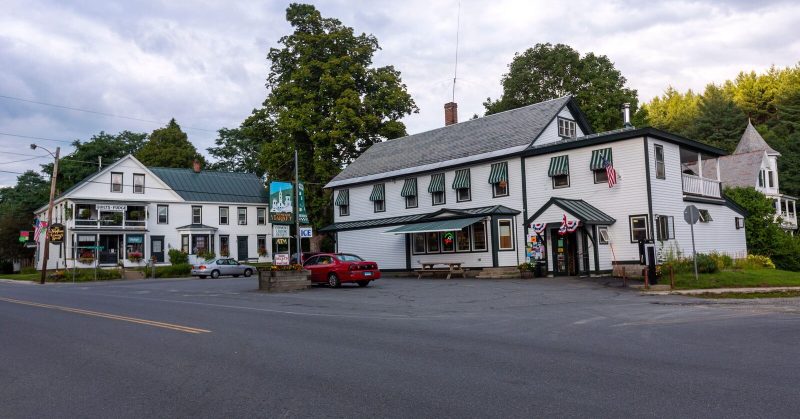
The village itself is one of the most architecturally intact in Vermont, anchored by a Federal-style courthouse and surrounding Greek Revival structures that draw preservation-minded buyers. But the land surrounding that village is what concerns woodland owners. Properties in Newfane range from a handful of acres attached to a historic farmstead to several hundred acres of back-road forestland with no visible boundary markers and no recent management history. Both ends of that spectrum are exactly the kind of ownership we work with regularly.
Local Conditions That Drive Demand for Forest Management
The climate in Newfane is genuinely challenging for forests and for the people who manage them. Winters are long and snowy, with the ridgelines receiving considerably more snow than the valley floor. Ice storms, which occur most winters, snap the crowns of poorly formed trees and create entry points for decay fungi. Beech bark disease has moved through this region steadily, and its effect on the Newfane forest is visible on almost any woodlot - the characteristic orange pustules and cankered bark on infected beeches, followed by the slow death of stems that were once valuable mast trees. Emerald ash borer has similarly changed the timber equation: ash, once a reliable source of income in a timber sale, is now a species that landowners need a plan for before it becomes a liability.
Spring mud season matters here more than in many parts of New England. The clay and glacial till soils on many Newfane hillsides stay saturated well into May, making timber harvesting during that window destructive to roads, trails, and residual stands. A properly written forest management plan accounts for seasonal access limitations and schedules harvests accordingly - this is not a detail a general contractor or a logger without a forester's involvement will reliably get right.
What Newfane Landowners Typically Call About
The most common reason a Newfane landowner contacts us is to enroll their property in Vermont's Current Use program - formally the Use Value Appraisal program - and to get the forest management plan that program requires. Property taxes in Windham County can be significant on large parcels, and the tax relief that Current Use enrollment provides is meaningful to families who want to hold land across generations without being forced to sell. We prepare those plans to fully meet Agency of Agriculture, Food and Markets standards, and we coordinate the enrollment paperwork so landowners are not left navigating the process alone. More details about the full scope of that work are on our services page.
Beyond Current Use, we hear regularly from landowners who have recently inherited a woodlot and have no idea what is on it, what it is worth, or what to do with it. A forest inventory and stand assessment gives those owners a clear picture. We also work with owners who want to conduct a timber sale and need a forester to mark boundaries, cruise timber, write bid specifications, supervise the harvest, and inspect the logger's compliance - because a timber sale without professional oversight is one of the fastest ways to degrade a forest that took decades to develop. And we work with landowners who simply want their forest healthier: improving species composition, reducing invasive shrubs like glossy buckthorn or honeysuckle that have moved into their understory, or creating openings for wildlife habitat.
How This Work Gets Done Well in Newfane
Good forestry in Newfane starts with walking the land. There is no substitute for it. Aerial imagery and GIS layers are useful tools, but they do not tell you that a particular hillside has a dense patch of striped maple suppressing regeneration, or that an old stone wall marks an unenforced boundary line, or that the logging road from the last harvest has a drainage problem that will erode badly in the next heavy rain. Our foresters cover the property on foot, recording species, diameter, crown condition, invasive pressure, deer browse impact, and site quality.
Timber harvesting in Newfane requires attention to Class II and Class III wetland buffers near the West River corridor and its tributary streams. Vermont's Acceptable Management Practices for Maintaining Water Quality on Logging Jobs apply here, and a well-written management plan anticipates those requirements rather than discovering them mid-harvest. Landowners who want to log within a Current Use plan must also follow the plan's prescriptions or risk penalty - another reason the plan itself needs to be practical and well-matched to the actual ground conditions. If you have questions about what this compliance looks like in practice, our common questions page covers many of them.
What to Expect from Start to Finish
The process begins with a free consultation, where we talk through your goals, your timeline, your ownership history, and whether Current Use enrollment makes sense for your situation. For many Newfane landowners it clearly does, but the program is not right for everyone - parcels below the minimum acreage, owners with near-term development plans, or properties with certain deed restrictions may face complications we will identify early.
After the consultation, we schedule a field visit and complete a full forest inventory. We then write the management plan, which for Current Use purposes must describe forest types, silvicultural prescriptions, and a schedule of practices over a ten-year planning horizon. We review the draft with you, make revisions, and submit the completed plan through the required state channels. Enrollment confirmation typically comes back within a few months, and from that point forward we are available to supervise any practices called for in the plan and to update the plan when the ten-year period approaches. The process is straightforward when a qualified forester manages it, and it protects both your land and your tax position for years to come.
Common Mistakes Newfane Landowners Should Avoid
The single most damaging mistake we see is allowing a logging operation to proceed without a forester marking the harvest. Loggers in Vermont vary widely in their professionalism, but even the most conscientious logger is not a licensed forester and is not in a position to select residual trees for long-term forest health. High-grading - removing the best trees and leaving the worst - is the natural result when no one is marking trees with silvicultural goals in mind. A high-graded Newfane woodlot can take fifty or more years to recover meaningful timber value.
The second common mistake is delaying Current Use enrollment because the process seems complicated. Each year of delay is a year of paying full assessed value on woodland that may qualify for a substantially lower tax rate. We have worked with landowners who waited a decade to enroll and, looking back, regretted every year of it. The paperwork is manageable when handled by someone who does it regularly. You can learn more about all the territory we cover on the areas we serve page.
Why Newfane Landowners Choose Professional Consulting Forestry
Vermont's forestry profession is licensed at the state level, and that matters. A licensed consulting forester carries professional liability, understands Vermont's regulatory framework in depth, and has no financial stake in a particular harvesting outcome the way a logger-forester combination might. In Newfane, where family land holdings are often multigenerational and deeply personal, landowners want advice they can trust is not being shaped by a commission on timber volume sold. That independence is the core of what consulting forestry provides.
The community here has a strong ethic of land stewardship. Longtime Newfane families and newer arrivals alike tend to care about the condition of their forest and its role in the broader landscape - watershed protection, wildlife corridor function, carbon storage, and the quiet pleasure of walking well-managed woodland. Professional forest management honors all of those values while also protecting the landowner's financial interests. That combination is why we have long-standing relationships with owners throughout this part of Windham County.
Nearby Areas We Frequently Serve
Our Newfane work regularly extends into the surrounding towns that share similar terrain and forest character. Townshend, directly to the northwest along the West River, has comparable hillside hardwood stands and a similar mix of longtime farming families and newer conservation-minded owners. Brookline's compact, heavily wooded landscape sits just to the north and includes a number of parcels with no recent management history. Dummerston and Putney to the east see more varied ownership patterns but the same basic species composition. Landowners in any of these communities are welcome to reach out - our familiarity with this part of Windham County runs deep, and we serve the full area from a single point of contact.
FAQ
Questions about Newfane
- Does my Newfane woodlot actually qualify for Vermont's Current Use program?
- Most forested parcels in Newfane of 25 acres or more qualify, provided they meet the stocking and management requirements the state sets. Some smaller parcels qualify when they adjoin other enrolled land under the same ownership. The mix of hardwood ridgelines and valley-bottom lots typical in Newfane fits the program well. We assess your specific parcel during a free consultation and tell you directly whether enrollment makes practical sense before any work begins.
- My family inherited a woodlot on one of the ridges above the village. Where do we even start?
- A forest inventory is the right first step. We walk the property, identify the timber stands, map the forest types, and note any boundary, invasive, or access issues. For many inherited Newfane properties, we find a mix of mature northern hardwood, some beech bark disease pressure, and logging history that is not well documented. That inventory gives your family a clear, honest picture and a basis for deciding whether to manage actively, enroll in Current Use, or both.
- How does spring mud season affect the timing of timber work on my Newfane land?
- It matters significantly. The clay and till soils common on Newfane hillsides stay saturated into May, and harvesting during that window causes serious rutting, erosion, and damage to residual trees. A well-written management plan schedules harvests for frozen ground in winter or dry late-summer and fall conditions. Ignoring seasonal access in your planning is one of the most common ways timber sales go wrong in this part of Windham County.
- Beech bark disease is visible throughout my woodlot. Does that change my management plan?
- Yes, and it is one of the most important current-conditions issues we address in Newfane forest plans. Diseased beech should generally be removed in harvests rather than left to die slowly, and the plan should account for recruiting other mast species - oaks on warmer aspects, for instance - to replace the wildlife value beech once provided. We also identify any beech showing disease resistance, which should be favored in the residual stand. Your plan addresses this directly rather than treating all beech the same.
- What happens if I sell timber on my Current Use land without following my management plan?
- Vermont can assess penalties including back taxes with interest on the portion of the parcel where unapproved activity occurred, and the parcel can be removed from the program entirely. In Newfane, where Current Use enrollment often represents meaningful annual tax savings on larger ridgeline properties, that penalty can be substantial. Any timber sale on enrolled land should be supervised by your consulting forester, who ensures the harvest matches the plan's prescriptions and documents compliance with state requirements.
- Can a consulting forester help me if I just want to improve wildlife habitat on my Newfane land, not sell timber?
- Absolutely. Habitat improvement is a legitimate and common forest management goal, and it is fully compatible with Current Use enrollment in Vermont. On a Newfane property, that might mean creating small canopy openings to encourage shrub layer growth for grouse and deer, improving mast production, managing stream buffers for brook trout habitat, or reducing invasive shrub pressure in the understory. A management plan can prioritize wildlife goals while still meeting all state program requirements.
Talk to a forester
Tell us about the land
Town, rough acreage, and whether the parcel is already enrolled. If you are working to a filing deadline, say which one and we will tell you honestly whether it is achievable.