
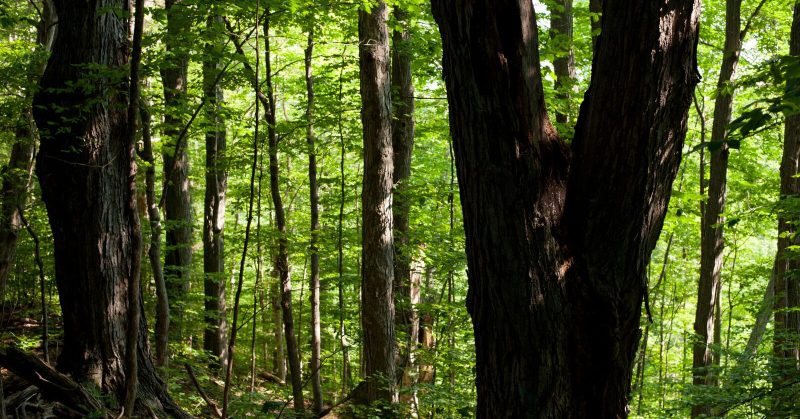
Our consulting forestry practice serves landowners throughout Windham, Vermont, providing written forest management plans, Current Use enrollment guidance, timber stand improvement, and ongoing stewardship advice. Whether you own a small woodlot behind a hillside farmhouse or several hundred acres of mixed northern hardwood forest, we help you manage that land responsibly and keep it in productive use.
Windham, Vermont and the Land That Shapes This Work
Windham is one of the quieter, less-traveled towns in Windham County, sitting at higher elevation in the Green Mountains and carrying a genuinely rural character that has changed slowly over the decades. The town has no village center of any commercial significance, which means the land itself - the forests, the fields, the stone-walled woodlots that have been growing since the last farms were abandoned - defines daily life here more than anything else. Most properties in Windham are large by Vermont standards, and the overwhelming majority of the landscape is forested. That forest is not an amenity or a backdrop; for many landowners, it is the primary asset and the primary responsibility that comes with owning property here.
The people who own land in Windham tend to fall into a few recognizable types. There are longtime Vermont families who inherited parcels that have been in the same name for generations and who may have had a forest management plan written decades ago, if ever. There are off-landers who moved here from urban areas, drawn by the privacy and the acreage, and who are just beginning to understand what responsible ownership of a working forest actually requires. And there are seasonal residents whose primary home is elsewhere but whose Vermont land still requires active stewardship regardless of how often they visit. All three groups benefit from professional consulting forestry, and all three are well represented in Windham.
Local Conditions That Drive Demand
Windham sits at elevations that produce cold, long winters and relatively short growing seasons compared to valley towns in the county. The soils here are characteristically shallow over bedrock on the ridgelines and wetter, heavier glacial till in the lower slopes and drainages. Those conditions matter enormously to forest management. Sugar maple, yellow birch, American beech, and red spruce each respond differently to soil depth and moisture, and a management plan written without site-specific knowledge of those conditions will miss its mark. Beech bark disease has been advancing through the region for years and is present in Windham's forests; any credible plan needs to address it honestly.
The high-elevation terrain also means ice storms and wind events do real work on the canopy. Blowdowns are a recurring feature of Windham's forest landscape, and they create both problems and opportunities for landowners who understand how to respond. Damaged timber left unaddressed turns into a significant fire hazard and an invitation to bark beetle pressure. A timely salvage cut, planned and marked by a professional forester, can recover value from a storm event while also giving the understory the light it needs to regenerate a healthy next stand.
What Windham Landowners Typically Call About
The most common first call we receive from Windham landowners is about Current Use enrollment - specifically, whether their parcel qualifies, what the enrollment requires, and what the tax reduction actually looks like for a property of their size and character. Vermont's Use Value Appraisal program, commonly called Current Use, is well known in theory but poorly understood in detail by most landowners. A qualifying forest parcel must have a forest management plan written by a licensed Vermont consulting forester, and that plan must be followed to maintain enrollment. We handle both the plan and the ongoing compliance so landowners are not left navigating the state's requirements on their own. If you have questions about the program before we speak, our common questions page covers the basics in plain language.
The second most common call is from landowners who have owned their property for years and have never had a timber inventory done. They know they have a forest; they do not know what is in it, how it is doing, or whether it is being crowded by low-quality stems that are suppressing the trees they actually want. A stand inventory and a professional appraisal of the growing stock is the foundation of any honest management plan, and it often surprises landowners to learn how much productive potential their woodlot has been quietly accumulating - or how much has been quietly lost to beech disease, deer browse pressure, or decades of high-grading by a previous owner.
Timber harvesting coordination is a third category. Windham landowners who want to conduct a timber sale need a forester to mark the trees, write the contract, and oversee the logger's work. The economics of a timber sale are rarely what an unrepresented landowner expects, and the ecological outcomes of a sale done without professional oversight can set the forest back by a generation. We represent the landowner's interests throughout the entire process, which is a different role from the logger's. To see the full scope of what we offer, the our services page lays it out in detail.
How the Work Gets Done in Windham
Access is a real consideration in Windham. Some parcels are served by class four or discontinued roads that are legally passable but practically challenging in mud season or after a heavy snowfall. We plan site visits around those realities, and we are familiar with the kind of seasonal limitations that apply to logging operations in high-elevation terrain. A responsible harvest plan in Windham will typically restrict skidder traffic to frozen ground or specify low-impact equipment on sensitive slopes - details that have to be written into the logging contract explicitly or they will not happen.
Vermont's Current Use program requires submitting the forest management plan to the Department of Forests, Parks and Recreation for review. The plan must meet the state's standards, which include minimum requirements for species composition, regeneration, and long-term site productivity. We work with the state's review process regularly and write plans that pass on the first submission. Landowners who try to navigate this on their own - or who hire a forester unfamiliar with Vermont's specific requirements - often find themselves going back and forth with the state in ways that delay enrollment and cost money. If you are ready to get started, the simplest first step is a free consultation to discuss your parcel.
What the Process Looks Like from Start to Finish
A first consultation is a conversation, not a sales pitch. We ask about your ownership history, your goals for the land, any previous work that has been done, and the general lay of the parcel. If the project makes sense to move forward, we schedule a site visit. On the site visit, we walk the property, take a stand inventory, note any problem conditions - invasive species, storm damage, beech disease, water resources that need buffer protection - and begin developing the framework of the management plan. That plan is a written document, not a verbal agreement, and it covers the current condition of the forest, the management objectives, the specific practices recommended over a ten-year planning horizon, and the schedule for follow-up work.
Once the plan is complete, we guide the enrollment application through the state process and remain available as the plan is implemented. Most good forest management plans in Vermont run on a ten-year cycle, with annual or biennial check-ins to confirm that the recommended practices are on track and to adjust for anything the forest throws at you in the meantime - a bad ice year, a windthrow event, a timber market shift that changes the economics of a planned harvest.
Common Mistakes and How to Avoid Them
The most damaging mistake Windham landowners make is waiting too long. A forest does not stand still while its owner decides what to do with it. Beech disease continues to spread. High-grading from a poorly supervised harvest removes the best genetics from the stand. Invasive shrubs like buckthorn and honeysuckle fill the understory and suppress native regeneration. Every year without active management is a year the forest makes its own decisions, and those decisions are not always in the landowner's interest.
A close second is enrolling in Current Use without actually following the plan. Vermont takes compliance seriously. A landowner who enrolls to get the tax benefit but does not implement the recommended practices risks penalties and back taxes that more than erase what they saved. We stay in contact with the landowners we work with specifically to avoid this outcome. Our areas we serve page can confirm whether your town is covered if you are unsure about our service area.
Why Windham Landowners Work with a Professional
The practical reason is simple: the financial consequences of getting it wrong are large. A mispriced timber sale, a Current Use penalty, or a forest regeneration failure after a poorly planned harvest can cost far more than the professional fees for a qualified consulting forester. But the less transactional reason is that most people who own land in Windham actually care about it. They want the forest to be healthier in twenty years than it is today. They want a plan that reflects the actual character of their woodlot, not a form document. That kind of stewardship requires local knowledge and professional judgment, and it is what we bring to every parcel we work on in Windham and the surrounding hill towns.
Neighboring Communities We Also Serve
Windham sits within a cluster of rural Windham County towns that share similar forest conditions, elevation ranges, and property characteristics. Landowners in Jamaica, Grafton, Andover, and Weston face many of the same management challenges and Current Use questions that Windham landowners do. We work across all of these communities as part of a connected regional practice. If you are a landowner in any of these nearby towns, the areas we serve page confirms coverage, and we are glad to discuss your property in the same detail we bring to any Windham engagement.
FAQ
Questions about Windham
- Does my Windham woodlot qualify for Vermont's Current Use program?
- Most forested parcels in Windham qualify if they are at least 25 contiguous acres and a licensed forester determines the land is capable of producing forest products. Given Windham's high-elevation terrain and predominantly forested landscape, the vast majority of woodlots we evaluate here meet that threshold. We assess your specific parcel during a site visit and tell you plainly before you commit to anything.
- How does high elevation and shallow soil in Windham affect my forest management plan?
- Windham's ridge and upper-slope soils are often thin over bedrock, which limits root depth and makes those sites more vulnerable to blowdown and slower to regenerate after a harvest. A plan written for your parcel accounts for those site conditions specifically - recommending lighter harvesting intensities on sensitive slopes and protecting the advanced regeneration that is already established rather than gambling on new seedling recruitment.
- Beech bark disease is all over my Windham woods - does that affect my Current Use plan?
- Yes, and any plan that ignores it is not serving you well. Beech bark disease is widespread in Windham County and needs to be addressed directly in your management plan. We identify resistant beech stems during the inventory, recommend retention of those individuals, and design harvests that favor the replacement species - yellow birch, sugar maple, red spruce - appropriate for your site elevation and soil type.
- My Windham property has class four road access that is impassable in mud season - can logging still happen?
- Yes, with proper planning. We design harvest operations around Windham's access realities, restricting timber removal to periods of frozen ground or specifying low-ground-pressure equipment for sensitive seasons. These conditions are written into the logging contract so they are legally binding, not just a verbal understanding. Planning access logistics is a core part of what a consulting forester does on a property like yours.
- I inherited land in Windham that was last cut decades ago with no oversight - where do I start?
- A stand inventory is the right first step. We walk the property, assess what is there now - species composition, age classes, stocking levels, any damage from past high-grading or disease - and give you an honest picture of where the forest stands. From there we can build a management plan that works toward your goals, whether that means a timber sale, Current Use enrollment, or simply getting the land on a sound long-term footing.
- What does a forest management plan for a Windham property actually cost, and how long does it take?
- Cost depends on parcel size, terrain complexity, and how much stand inventory work is needed - a straightforward Windham woodlot takes less time than a multi-stand, high-elevation parcel with significant storm damage or disease pressure. We discuss fees transparently during the initial consultation before any work begins. Most plans are completed within a few weeks of the site visit, and we submit them to the state on your behalf.
Talk to a forester
Tell us about the land
Town, rough acreage, and whether the parcel is already enrolled. If you are working to a filing deadline, say which one and we will tell you honestly whether it is achievable.