
Selling land in Current Use: what happens at closing in Vermont
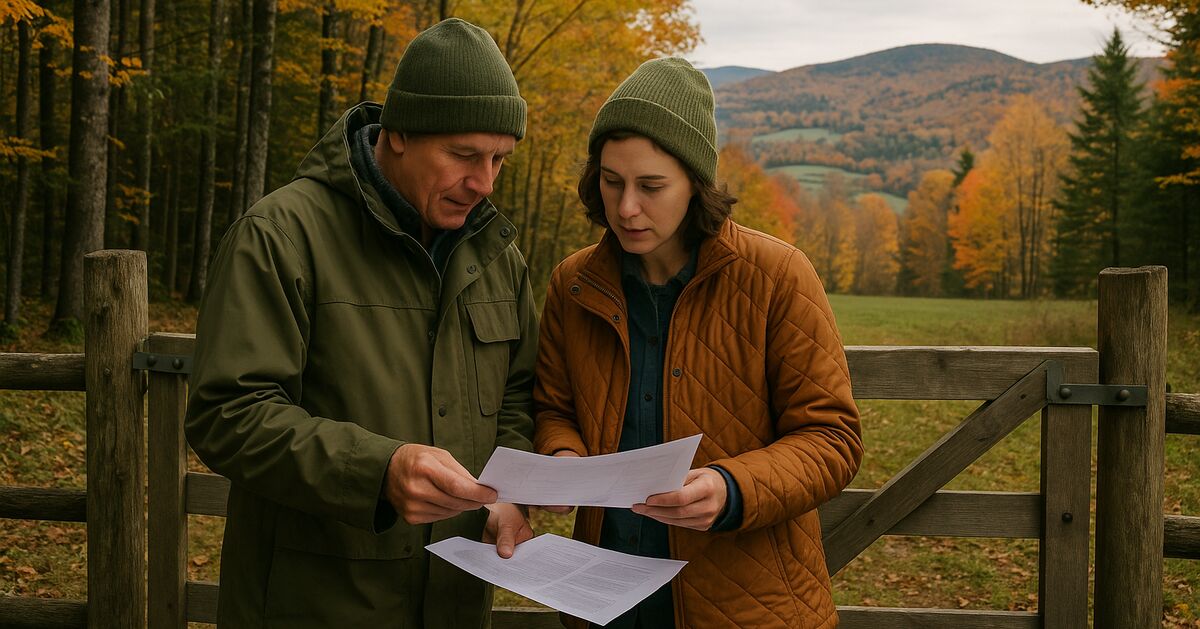
Selling a property enrolled in Vermont's Current Use program is not like selling a house with a fresh coat of paint - the program follows the land, and if the transaction is handled without proper preparation, either the seller or the buyer can face a tax bill they did not see coming.
This post walks through exactly what happens to a Current Use enrollment when a Windham County property changes hands, what the buyer takes on, where the risk of the land use change tax (LUCT) lives, and what both parties should sort out before anyone signs a purchase and sale agreement.
What Current Use actually is - and why it sticks to the land
Vermont's Use Value Appraisal program, commonly called Current Use, assesses enrolled forestland and farmland at its agricultural or forestry value rather than its fair market value. For most Windham County landowners in towns like Newfane, Grafton, Townshend, and Jamaica, that difference is substantial, because wooded hillside land can carry a high fair market value while generating only modest timber income.
The enrollment is tied to the parcel, not to the person who owns it. Vermont statute (32 V.S.A. Chapter 124) makes this clear: the land use change tax is levied against the land when it is developed or withdrawn from the program, regardless of who originally enrolled it. That single fact shapes everything that follows in a real estate transaction.
If you want a deeper look at what Current Use enrollment actually requires before a sale comes up, the Vermont Current Use enrollment guide for Windham County woodlands covers the baseline obligations in detail.
The land use change tax - who owes it and when
The land use change tax (LUCT) is the financial consequence of pulling land out of the program or developing it. Under Vermont law, the LUCT is generally calculated as a percentage of the land's full fair market value at the time of the change, though the exact rate depends on how long the land was enrolled. That percentage is set by statute and does not vary by town or parcel size.
A sale by itself does not trigger the LUCT. A simple transfer of ownership - even at full market price - keeps the enrollment intact as long as the new owner accepts the Current Use obligations and the land remains undeveloped. The Town of Townshend, the Town of Halifax, and every other municipality in Windham County all follow the same state-level rule on this point.
What does trigger the LUCT is a change in use: subdividing the parcel into lots smaller than the minimum required by the program, building a house or road on forestland without following the development rules, or voluntarily withdrawing the parcel from enrollment. If a buyer purchases an enrolled parcel and then clears land for a house without accounting for the tax, the bill comes to them - and it can be significant.
What transfers with the property - and what does not
When enrolled land sells, the buyer steps into the seller's shoes with respect to Current Use. That means:
- The enrollment itself continues without interruption, provided the buyer notifies the Vermont Division of Property Valuation and Review (PVR) and signs on to the existing forest management plan obligations.
- The forest management plan tied to the parcel transfers with the land. The buyer must honor its terms or work with a consulting forester to update it.
- The property tax benefit carries forward - the buyer continues to be assessed at use value rather than market value.
- Any scheduled timber harvests or management activities in the plan remain obligations. Ignoring them can put the enrollment at risk.
What does not transfer automatically is any specialized understanding of those obligations. A buyer who has never dealt with a forest management plan, who does not know what a timber sale contract looks like, or who is not aware of the program's five-year review cycle can find themselves out of compliance before the first full tax year is up. Our frequently asked questions page addresses a number of the practical details that first-time buyers of enrolled land often raise.
The seller's responsibilities before closing
Sellers carry real obligations in this process. Failing to disclose Current Use enrollment is both a legal and practical problem, because the LUCT liability does not disappear - it just becomes a dispute between the parties after closing.
A responsible seller should:
Disclose the enrollment in writing. The purchase and sale agreement should state clearly that the property is enrolled in Vermont's Current Use program and specify the acreage that is enrolled.
Provide the current forest management plan. The buyer needs time before closing to read the plan, understand what activities are scheduled, and decide whether the plan fits their intentions for the land. If the plan is due for a five-year update, that is worth knowing before closing day.
Clarify who bears the LUCT if it is triggered. If the buyer intends to develop part of the parcel, the contract should spell out who pays the land use change tax and on how much acreage. Leaving this question to assumption is a common source of post-closing disputes.
Notify PVR of the ownership change. Vermont's Division of Property Valuation and Review asks to be notified when an enrolled parcel changes hands. The seller should coordinate with their attorney and their forester to make sure the notification happens on schedule.
Sellers in towns like Grafton, Athens, or Dummerston should also be aware that local listers may have questions when a property transfers. Keeping the local records straight protects both parties.
What buyers need to investigate before closing
A buyer purchasing enrolled land in Windham County is taking on a real set of obligations. Before signing anything, it pays to understand exactly what those obligations are.
Read the forest management plan carefully. The plan will specify what activities are required - invasive species control, timber harvests, road maintenance, or wildlife habitat work - and on what timeline. If a harvest is scheduled within two years and the buyer has no interest in logging, that is a conversation to have before closing, not after.
Understand what development you can and cannot do. The Current Use program does not prohibit all development, but it does restrict it. The rules around building a single-family home on an enrolled parcel, carving out a small lot, or adding a road are specific. Vermont's PVR office publishes guidance on this, and a consulting forester can explain what the rules mean for a specific parcel. Our services page describes how a consulting forester works with buyers to review existing plans and assess options.
Ask whether any LUCT liability is foreseeable. If the parcel has been in the program for decades and the fair market value has risen considerably, the potential LUCT exposure is meaningful. Buyers who plan to keep the land enrolled have little to worry about, but buyers who want flexibility to subdivide or develop should calculate the potential tax before they fall in love with the acreage.
Verify the plan is current. A forest management plan that is more than five years old without a review raises a flag. If the plan has lapsed or was never updated after a major harvest, the enrollment could be in a precarious state.
Talk to a licensed consulting forester, not just an attorney. Real estate attorneys handle the legal transfer well, but they are not trained to assess whether a forest management plan is sound or whether the current activities on the land match what the plan requires. For enrolled forestland in southern Vermont, a consulting forester is a necessary part of the buyer's due diligence team. You can see the towns we serve across the region on our locations page.
Common complications that come up in Windham County transactions
A few situations come up again and again when enrolled land changes hands in this part of Vermont.
Partial sales. A landowner in Jamaica or Wardsboro may want to sell off a smaller parcel carved from a larger enrolled tract. This often triggers the LUCT on the acreage being removed, and it may also affect the viability of the remaining enrolled parcel if it falls below the minimum acreage requirements. Thinking through this before listing is far better than discovering the complication during the purchase and sale negotiation.
Estate transfers. When enrolled land passes through an estate rather than an arm's-length sale, the mechanics are somewhat different, but the underlying rule is the same - the land stays enrolled only if the new owner accepts the obligations and notifies PVR. Heirs who assume the land is simply an asset to be liquidated can trigger the LUCT without realizing it.
Buyers who want to build. A buyer who falls in love with 120 acres in Marlboro or Brookline and wants to build a home on a small corner of it needs to understand that even a small development footprint can affect the enrollment. Vermont's rules may allow a limited exclusion for small developed areas within an enrolled parcel, but this needs to be verified with PVR and coordinated with the forester and town before proceeding.
Outdated plans on long-held parcels. Families that have held enrolled land for a generation sometimes have forest management plans written under older program standards. When that land sells, the buyer inherits a plan that may need significant updating. Our post on what a Vermont Current Use forest management plan must include explains what a current, compliant plan looks like.
The role of a consulting forester in a Current Use property transaction
A consulting forester is not just a figure who appears when timber needs to be cut. In the context of a property sale, a forester serves as the technical translator between the legal documents and the actual condition and obligations of the land.
Before listing, a forester can review the existing plan, flag any upcoming compliance requirements, estimate the potential LUCT exposure on various development scenarios, and help the seller present the land honestly and accurately to buyers.
During due diligence, a forester retained by the buyer can walk the property, assess whether the management activities called for in the plan have been carried out, identify any conditions that could affect the enrollment, and help the buyer understand what they are actually committing to.
After closing, a forester can update the management plan, coordinate with the town listers and PVR, schedule any required activities, and keep the buyer in compliance going forward. This ongoing relationship is especially valuable for buyers who are new to land ownership or who have moved from a different state. The Vermont Current Use program is not difficult to work with once you understand its logic, but that understanding takes time that a forester can compress considerably.
For buyers and sellers in Newfane, Townshend, and Windham, having a local forester who knows the specific timber types, the local lister relationships, and the practical terrain of Windham County makes a real difference.
A quick pre-closing checklist
Whether you are buying or selling enrolled land in Windham County, these items belong on your list before the closing date:
- Confirm the enrollment status and enrolled acreage with PVR
- Obtain and review the current forest management plan
- Identify any scheduled management activities and who is responsible for them
- Calculate the potential LUCT on any acreage the buyer might develop or withdraw
- Draft clear contract language addressing disclosure, LUCT allocation, and plan obligations
- Notify PVR of the ownership change as required
- Engage a consulting forester for a pre-closing walkthrough
- Update the forest management plan if it is approaching or past its five-year review date
Getting ready for your transaction
The Current Use program is one of the most meaningful tools Vermont landowners have for keeping forestland in productive, undeveloped use. When a property transfers carefully - with proper disclosure, a solid management plan, and both parties informed of what they are agreeing to - the enrollment continues without interruption and the land stays in the program for another generation.
When it transfers carelessly, the LUCT can surface as an unwelcome surprise, the enrollment can lapse, and a property that has been managed well for decades can lose both its tax benefit and its management momentum.
If you are preparing to sell enrolled land or considering purchasing a Current Use parcel anywhere in Windham County, reach out to us before the purchase and sale agreement is drafted. Getting the forester involved early is the step that prevents most complications described in this post.
You can also browse our full blog for related guidance on timber sales, management planning, and the practical side of forest stewardship in southern Vermont.
Sources & further reading
- Vermont Use Value Appraisal (Current Use) Program overview (Vermont Department of Taxes)
- Land Use Change Tax guidance (Vermont Department of Taxes)
Revision history (1)
- Aug 31, 2026 - Pre-publish editorial QA: 2 flagged, 2 softened; claim audit: 6 claims, 2 rewritten
Claim-by-claim audit (6 checked)
- “Under Vermont law, the LUCT is generally calculated as a percentage of the land's full fair market value at the time of the change, though the exact rate depends on how long the la…” (rewritten to what the article can stand behind)
- “A sale by itself does not trigger the LUCT.” (cited → tax.vermont.gov)
- “What does trigger the LUCT is a change in use: subdividing the parcel into lots smaller than the minimum required by the program, building a house or road on forestland without fol…” (cited → tax.vermont.gov)
- “Vermont statute (32 V.S.A. Chapter 124) makes this clear: the land use change tax is levied against the land when it is developed or withdrawn from the program, regardless of who o…” (cited → tax.vermont.gov)
- “This often triggers the LUCT on the acreage being removed, and it may also affect the viability of the remaining enrolled parcel if it falls below the minimum acreage requirements.” (reasoning shown in the article)
- “Vermont's rules may allow a limited exclusion for small developed areas within an enrolled parcel, but this needs to be verified with PVR and coordinated with the forester and town…” (rewritten to what the article can stand behind)
Talk to a forester
Tell us about the land
Town, rough acreage, and whether the parcel is already enrolled. If you are working to a filing deadline, say which one and we will tell you honestly whether it is achievable.