
How to enroll your Windham County woodland in Vermont's Current Use program
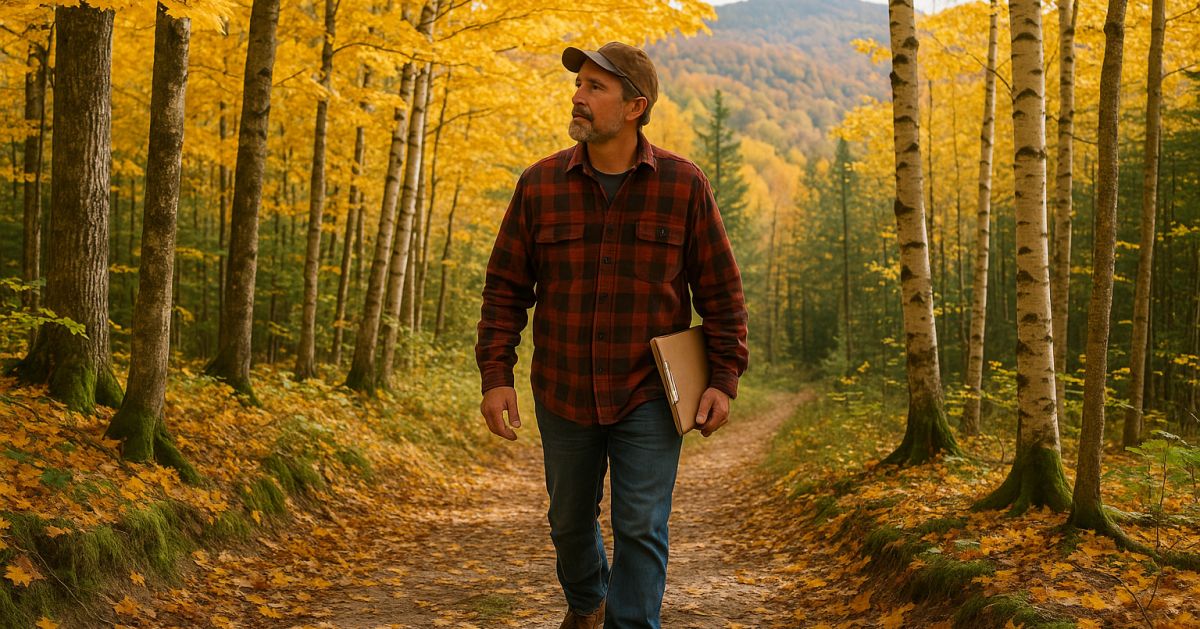
Vermont's Use Value Appraisal program is one of the most effective tools a woodland owner in Windham County has for keeping forested land in the family, and yet the paperwork, deadlines, and forestry requirements catch people off guard every single year. This guide walks you through the full process, step by step, so you know exactly what to expect before you pick up the phone.
What the Current Use program actually does
The formal name is the Use Value Appraisal (UVA) program, administered by the Vermont Department of Taxes. Instead of taxing your forestland at its fair market value (which reflects what a developer might pay), the state appraises it at its "use value" as productive agricultural or forest land. In most parts of Windham County, that difference is significant. Towns like Newfane, Townshend, Grafton, and Halifax carry forested acreage that can carry high market assessments simply because of their scenic character and proximity to recreation. Current Use lets that same acreage be taxed as the working forest it actually is.
There is a land use change tax if you later develop enrolled land, so enrollment is not a decision to make casually. Per the Vermont Department of Taxes, that change tax is currently set at 10 percent of the fair market value at the time of the change. Understanding that going in helps you plan honestly.
Who qualifies: the basic eligibility rules
The Vermont Current Use program sets clear minimum thresholds, and meeting them is the first thing to sort out.
- Acreage. You need at least 25 acres of agricultural or forestland, or a combination of the two. Parcels smaller than 25 acres may still qualify if they are contiguous with other enrolled land under the same ownership, or if a licensed forester certifies that a meaningful amount of timber can be produced.
- Stocking. Forest parcels must meet minimum stocking standards, meaning the land needs to support a measurable volume of trees capable of producing commercial timber over time. A licensed consulting forester will assess this during the site visit.
- A forest management plan. This is the requirement that surprises owners the most. You must have a written forest management plan prepared by a licensed Vermont consulting forester. The plan must be approved by the Vermont Department of Forests, Parks and Recreation before your enrollment application is complete.
- No primary residence on the parcel. Your home site is excluded from the enrolled acreage, though the surrounding woodland can still qualify.
If your land is in Jamaica, Wardsboro, Marlboro, or any of the other towns we serve, the same state rules apply. The local grand list and town assessor's office will ultimately apply the use value to your municipal tax bill, but the enrollment itself is a state process.
The forest management plan: why it is more than paperwork
A lot of owners assume the forest management plan is a formality, a hoop to jump through to get the tax benefit. It is actually the heart of the whole program, and understanding why makes the process feel less like a burden.
The plan documents the current condition of your woodland: species composition, stand structure, timber volume, wildlife habitat features, and any special areas like wetlands or steep slopes. It then lays out a schedule of silvicultural activities over a 10-year period. Those activities might include timber harvests designed to improve stand health, invasive species control, wildlife habitat improvements, or simply allowing certain areas to mature undisturbed.
The plan is what tells the state that your land is being managed, not just sitting idle. It also becomes your management roadmap. Owners who engage seriously with their plan often report that they learn more about their land than they expected, and that they start making better long-term decisions about timber sales, boundary maintenance, and habitat.
Our consulting forestry and Current Use forest management plan services are built around exactly this kind of hands-on, site-specific planning. A good plan reflects what is actually on your land, not a generic template.
Step-by-step enrollment walkthrough
Step 1: Hire a licensed Vermont consulting forester
Start here, not with the paperwork. A licensed consulting forester (one licensed under Vermont's Title 30, Chapter 87 standards) will visit your property, assess whether it meets stocking requirements, and write the management plan. Choose someone who knows Windham County conditions. Forest types here range from northern hardwood stands of sugar maple, yellow birch, and beech on the ridges above Marlboro and Halifax, to more mixed softwood stands in the valleys around Townshend and Windham. Local knowledge matters when it comes to realistic harvest scheduling and species recommendations.
Step 2: Have the forest management plan approved
Once your forester completes the plan, it goes to the Vermont Department of Forests, Parks and Recreation (VTDFPR) for review and approval. This is a state agency review, not a town-level process. The VTDFPR checks that the plan meets the technical standards required under the program. Plan approval can take several weeks, so build that time into your schedule.
Step 3: File the enrollment application with the Vermont Department of Taxes
With an approved management plan in hand, you file the Current Use enrollment application (Form LU-1) with the Vermont Department of Taxes. The application asks for parcel information, acreage breakdown, and documentation of the approved plan. There is a per-parcel enrollment fee, which as of recent program guidance is $100 for forestland parcels. Check the Department of Taxes website for the current fee schedule before you file.
Step 4: Notify your town
The Department of Taxes sends notification to your town assessor once enrollment is confirmed. The assessor then applies the use value to your grand list entry. You will see the tax benefit reflected in the following year's property tax bill. Owners in Newfane, Grafton, and Athens sometimes contact their town clerk to confirm the change was received, which is a reasonable step and easy to do.
Step 5: Keep up with ongoing requirements
Enrollment is not a one-time event. The program has ongoing obligations:
- Your forest management plan must be renewed on the 10-year cycle. When the plan expires, you need a new one to stay enrolled.
- You must report significant changes to the parcel, including any subdivision or development.
- Timber harvests should generally follow the plan. If circumstances change and you want to adjust the silvicultural approach, work with your forester to amend the plan rather than deviating from it.
- Vermont's Acceptable Management Practices (AMPs) for logging apply to any harvest on enrolled land. These are standards set by the VTDFPR to protect water quality and forest health during timber operations.
Common mistakes that delay or derail enrollment
A problem that comes up again and again among first-time applicants is starting the state enrollment application before the management plan is approved. The application is incomplete without the approved plan, and submitting it prematurely just creates confusion. Do the forestry work first.
Another frequent issue involves parcel boundaries. If your deed description is outdated or your boundary lines are unclear, the forester has trouble accurately mapping the enrolled area, and the Department of Taxes may flag inconsistencies. If you have not walked your boundaries recently, doing so with your forester is time well spent.
Owners sometimes also underestimate how long the full process takes. From initial forester contact to seeing the benefit on your tax bill, the process can run six months to a year depending on plan complexity and agency review timelines. Starting in late summer or fall gives you the best chance of having enrollment confirmed before the following April 1 filing deadline, which is when the grand list is set for that tax year.
What the tax savings can look like in Windham County
We will not invent specific dollar figures here because the actual savings depend on your town's current assessment rate, the fair market value the assessor has assigned your land, and the state-set use value for your forest type and region. What we can say is that in towns with high market values relative to timber productivity (and several Windham County towns fit that description), the gap between market assessment and use value appraisal can be substantial. Your consulting forester and your town assessor can both help you estimate the likely difference before you commit to the enrollment process.
If you want a starting point for the conversation, our frequently asked questions page covers some of the most common questions about how the program works and what to expect from the planning process.
Landowners across Windham County we work with
We help woodland owners through the Current Use enrollment process across the full range of towns in this region. Whether your land is in Townshend, Jamaica, Brookline, Dummerston, Guilford, Wardsboro, or anywhere else in the county, the steps are the same and the local forest conditions are ones we know well. You can find a full list of the communities we serve on our locations page.
The program is genuinely worth the effort for owners who plan to hold their land for the long term. It rewards stewardship, keeps tax burdens manageable, and gives you a written plan that guides real decisions about your woodland for the next decade.
Ready to get started?
The best first move is a conversation with a licensed consulting forester who can walk your land, tell you honestly whether it qualifies, and give you a realistic sense of what the management plan will involve. From there, the enrollment steps are straightforward.
Reach out through our contact page and we can talk through your parcel, your goals, and what a forest management plan would look like for your specific property. There is no obligation, and getting the right information early saves a lot of backtracking later.
Talk to a forester
Tell us about the land
Town, rough acreage, and whether the parcel is already enrolled. If you are working to a filing deadline, say which one and we will tell you honestly whether it is achievable.