
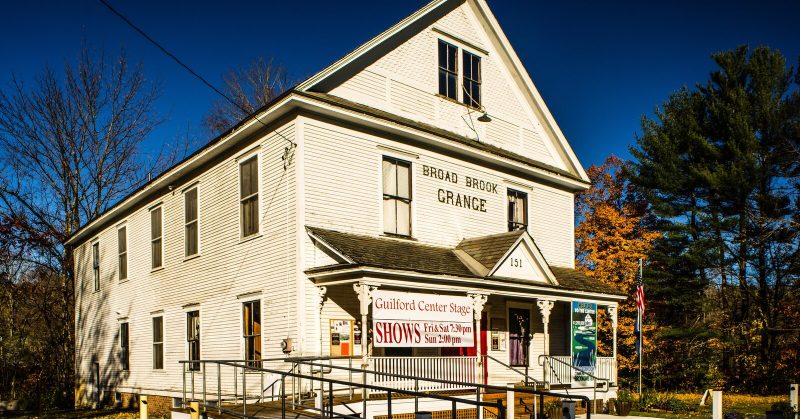
Serving Guilford, Vermont and the surrounding Windham County communities, our consulting forestry practice provides full-service forest management plans, Current Use enrollment support, timber stand improvement guidance, and landowner consulting for properties ranging from a few wooded acres to several hundred. We work directly with Guilford landowners from the initial site walk through plan approval and ongoing stewardship.
Guilford's Forested Landscape and What It Means for Landowners
Guilford sits at the southern edge of Vermont, sharing a border with Massachusetts, and its landscape reflects that position in a meaningful way. The terrain rolls through a mix of ridgelines, stream corridors, and broad agricultural valleys, with forested land covering a significant portion of the town's total acreage. Many properties in Guilford carry a mix of open fields transitioning into mature hardwood stands, second-growth forest recovering from earlier agricultural clearing, and patches of softwood on the wetter or more northerly slopes. This variety is exactly the kind of complexity that rewards having a professional forest management plan in place rather than managing by intuition alone.
The town has a strongly rural character. Unlike some southern Vermont communities that have shifted heavily toward vacation or second-home ownership, Guilford retains a working-landscape identity. Many families here have held land for multiple generations, and the relationship to that land tends to be practical and grounded. At the same time, a steady arrival of newer landowners drawn to the relative affordability and the proximity to Brattleboro has introduced a different set of questions - people who want to manage their forest responsibly but are not yet sure what that actually requires. Both groups benefit from the same thing: a credible, site-specific plan built around how that particular piece of ground actually behaves.
Local Conditions That Shape Forest Management in Guilford
Guilford's climate sits right at the transition zone between the colder upland Vermont interior and the slightly more moderate conditions of the Connecticut River valley. That transition produces its own silvicultural patterns. Sugar maple dominates the well-drained upland sites and forms the backbone of most hardwood stands, alongside yellow birch, American beech, and red maple on the cooler or wetter ground. Red oak becomes more prominent on the drier south and southwest-facing slopes, especially as you move toward the Massachusetts line. White pine establishes aggressively on old fields and disturbed ground, and those stands often reach a stage where thinning becomes both ecologically and economically important within fifteen to twenty-five years of establishment.
Ice storms and the heavy wet snow events that hit this part of Vermont with some regularity cause meaningful damage in overstocked or structurally weak stands. We see this pattern repeatedly in Guilford - a stand that looked passable before a January ice storm becomes a tangle of broken tops and leaning stems after one. That damage creates both a cleanup challenge and, if managed correctly, an opportunity to improve the residual stand's structure and value. A current forest management plan accounts for this kind of disturbance-driven management need rather than treating the forest as a static resource.
What Guilford Landowners Typically Call About
The most common reason Guilford landowners reach out to us is Current Use enrollment, and that is not surprising. Vermont's Use Value Appraisal program, commonly called Current Use, can reduce the assessed value of qualifying forest land substantially, and in a town like Guilford where property taxes on larger parcels are a real budget consideration, the savings matter. Enrolling in the program requires a forest management plan written by a licensed forester and approved by the state - it is not something a landowner can do on their own with a template. We guide that process from the first site visit through plan submission and state approval.
Beyond enrollment, we hear frequently from landowners who have received unsolicited timber purchase offers. Guilford has enough marketable timber, particularly in its older hardwood stands and maturing white pine, that timber buyers do approach landowners directly. Understanding whether a proposed harvest is fair and whether it aligns with the long-term health of the stand requires independent professional judgment. We provide that assessment so landowners are not negotiating from a position of incomplete information. You can learn more about the full range of what we offer on our services page.
Timber stand improvement is another frequent request. Many of Guilford's forests have a mid-story composition problem, where shade-tolerant but low-value species like striped maple and American beech - particularly the beech that has been affected by beech bark disease - are suppressing regeneration of higher-value species. Addressing that through selective cutting or herbicide treatment in targeted areas can shift the trajectory of a stand over a decade in ways that matter both ecologically and financially. We also work with landowners planning trails, managing invasive species along forest edges and stream buffers, and thinking through what to do with land they may eventually want to pass on to the next generation.
How We Do the Work in Guilford
A Guilford property presents its own set of access and logistics considerations. Many parcels in the town have seasonal or shared-use roads, and some of the larger holdings involve multiple access points and terrain that is steep enough to require careful thought about where and when harvesting equipment should operate. A good forest management plan is not just a biological document - it addresses harvest timing, skid trail placement, stream crossing requirements, and slash management in ways that reflect the actual ground conditions on a specific parcel.
Vermont has clear regulatory requirements around forestry activity, including the Forest Practices Act, which governs how harvesting is conducted, and Act 250, which can apply on larger parcels or in certain development-adjacent scenarios. We know those frameworks and work within them as a routine part of every engagement. For landowners unfamiliar with any of these requirements, our common questions page covers much of the background, and we are always glad to walk through specifics directly. Guilford also sits within the Watershed of the West River and several of its tributaries, and working carefully around those riparian corridors is both a legal requirement and a stewardship priority we take seriously.
What the Process Looks Like Start to Finish
For a landowner in Guilford, the engagement typically begins with a free consultation where we discuss the property, the landowner's goals, and whether a formal management plan, a Current Use application, or a more limited advisory visit makes the most sense. That conversation happens before any fee is discussed or any commitment is made. If a management plan is the right path, we schedule a site visit - often one or two field days depending on acreage - where we walk the property, take inventory of the stands, assess stocking, species composition, and health, and evaluate access conditions. We document what we find and use that fieldwork to build a written plan that meets state standards and reflects the landowner's actual objectives.
The written plan lays out stand-by-stand recommendations, a management schedule, harvesting considerations, wildlife habitat features worth protecting, and any specific actions like invasive species treatment or trail work that the landowner has identified as priorities. For Current Use enrollment, the plan is submitted to the Vermont Department of Forests, Parks and Recreation for approval. That approval process has its own timeline, and we manage the follow-up to keep things moving. Once approved, we remain available for questions and annual check-ins, and we update plans as conditions change or as management activities are completed.
Common Mistakes to Avoid
The most consequential mistake Guilford landowners make is allowing a harvest to proceed without an independent forester's involvement. A timber buyer has an economic interest in the transaction that is different from yours. Without your own professional assessment, you have no reliable basis for evaluating what is being proposed. High-grading - the removal of the best trees while leaving poor-quality material behind - degrades the long-term value and ecological health of a stand and is very difficult to reverse. We see the aftermath of high-grade harvests in Guilford's forests, and the recovery timeline is measured in decades, not years.
A second common mistake is delaying Current Use enrollment past the point where it makes financial sense. There is no retroactive credit for years when you were eligible but not enrolled. Landowners who put off the process - often because it seems complicated - can leave meaningful tax savings on the table over several years. The process is not as complicated as it looks when you have a licensed forester who handles this routinely. Review the areas we serve to confirm coverage, and then get the process started sooner rather than later.
Why Guilford Landowners Work With a Local Professional
Guilford landowners who have worked with general land consultants or out-of-region foresters often tell us the same thing: the advice they received was technically sound but did not account for how things actually work in southern Vermont. Local knowledge matters here. Understanding which mills are currently operating, what species and quality grades are moving, how the state's Current Use office processes applications, and what the actual silvicultural norms are for this specific transition-zone landscape - these things only come from sustained work in the region. Our practice is based in Windham County, and Guilford is part of our regular working territory.
Neighboring Areas and the Broader Southern Vermont Context
Guilford's forested land connects ecologically and practically to the landscapes of the communities around it. Landowners in Guilford often have questions about how their management decisions interact with conservation easements held by regional land trusts, or how their forests relate to wildlife corridors that extend south into Massachusetts or west toward the Green Mountain National Forest foothills. We have experience working across those contexts and can help Guilford landowners understand how their property fits into the larger landscape picture. Whether your primary goal is tax savings through Current Use, a healthier and more productive forest, a sustainable timber income, or simply a piece of land you can pass on in good condition, a professionally written, locally grounded management plan is the right place to start. Reach out for a free consultation and we will take it from there.
FAQ
Questions about Guilford
- Does my Guilford property qualify for Vermont's Current Use program?
- Most Guilford parcels of 25 acres or more that are at least 75 percent forested can qualify, provided a licensed forester writes and the state approves a management plan. Some smaller parcels qualify if they connect to other enrolled land. Guilford's mix of upland hardwood stands and transitional softwood sites tends to meet the program's stocking and productivity requirements without difficulty. We assess your specific acreage and stand conditions during an initial consultation before you commit to anything.
- What species of timber are most valuable on a Guilford woodlot right now?
- On typical Guilford upland sites, sugar maple in sawlog grades remains the most sought-after species, followed by yellow birch and red oak on drier slopes. Quality white pine from maturing old-field stands has steady demand. Beech bark disease has reduced the value of beech significantly across the region. Actual marketability depends on tree size, log quality, and current mill demand, which we assess during a site visit rather than relying on general assumptions.
- An independent timber buyer approached me about purchasing timber from my Guilford property. Should I be concerned?
- Unsolicited timber purchase offers are common in Guilford, particularly for properties with visible mature hardwood or pine. The buyer's interest is a reasonable signal that your stand has value, but their offer reflects their margin, not your full opportunity. Without an independent forester's cruise and market assessment, you have no reliable basis for comparison. We provide that independent evaluation so you can negotiate from an informed position or decline if the terms are not in your long-term interest.
- How long does it take to get a Current Use management plan approved in Vermont?
- Once we complete the fieldwork and write the plan, state review typically takes several weeks to a few months, depending on the time of year and the department's current workload. Applications submitted in late summer and fall, before the enrollment deadline, tend to move through more quickly when submitted with complete documentation. We manage the submission and any follow-up requests from the state, so you are not navigating that process on your own. Starting early gives you the most comfortable timeline.
- My Guilford land had a harvest done by a previous owner. Can it still get a management plan and enter Current Use?
- Yes, prior harvests do not disqualify a parcel from Current Use enrollment, though the history matters. If the previous harvest was a high-grade that left a poorly stocked or structurally compromised stand, the management plan will need to address a realistic recovery and improvement schedule. The state evaluates the plan on its merits. We inventory current conditions honestly, design a plan around what is actually there, and determine whether the stand meets minimum productivity thresholds for enrollment.
- Do I need to do anything to my Guilford forest after the management plan is approved?
- Current Use enrollment requires that management activities described in the plan are carried out on a reasonable schedule and that the plan is updated periodically. You are not required to harvest timber if that is not your goal, but the land must remain in active stewardship consistent with the plan's recommendations. We help Guilford landowners stay on track with their plan schedules, document completed activities, and update plans when the forest's condition changes or when new management priorities emerge.
Talk to a forester
Tell us about the land
Town, rough acreage, and whether the parcel is already enrolled. If you are working to a filing deadline, say which one and we will tell you honestly whether it is achievable.