
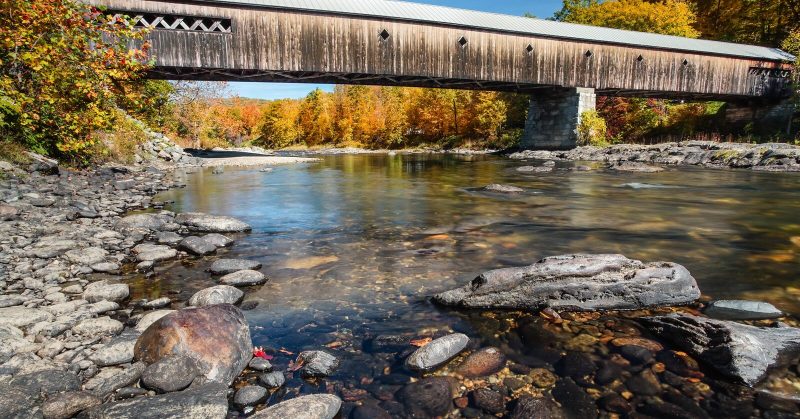
Our consulting forestry practice serves Dummerston, Vermont landowners with professionally written forest management plans, Current Use enrollment guidance, timber inventory, stand improvement prescriptions, and long-term stewardship planning. We work across Dummerston's varied terrain - from ridge-top sugar bush to bottomland hardwood - helping property owners meet Vermont's Use Value Appraisal program requirements and manage their woodlands with confidence.
Dummerston's Landscape and What It Means for Forest Management
Dummerston is one of the larger townships in Windham County by land area, and the vast majority of that land is forested. Sitting in the broad valley carved by the West River before it meets the Connecticut River corridor, the town rises sharply from its lowland pastures into steep, rocky hillsides covered in northern hardwood and mixed softwood forest. That topographic range is not a detail - it shapes nearly every decision a consulting forester makes here. The sugar maples that dominate the mid-elevation slopes are among the most economically and ecologically valuable trees in southern Vermont, and managing them properly requires someone who understands the specific soil types and aspect conditions that define Dummerston's ridges. The lower ground, closer to the floodplain, carries a different mix: silver maple, cottonwood, ash, and patches of hemlock along the stream corridors. Each forest type calls for a distinct management approach.
The town's character is shaped by long agricultural and orchard traditions alongside its timber heritage. Many families have owned their land across multiple generations. That history means the forests themselves carry layers of past management decisions - some thoughtful, some not - and a consulting forester's job often begins with reading those decisions in the current stand structure. High-grading in the mid-twentieth century left many Dummerston woodlots looking crowded at the top and weak in the understory, and reversing that damage is some of the most satisfying and consequential work we do here.
Local Conditions That Drive Demand for Forestry Services
Dummerston's climate is quintessentially southern Vermont: cold, snowy winters that load softwood crowns with ice and snap tops off hemlocks and white pines, followed by wet springs that saturate soils and make poorly timed logging operations deeply damaging. Summer brings enough moisture to sustain productive growth, but it also creates the humid conditions that allow beech bark disease and other fungal problems to spread through stands. The emerald ash borer has made significant inroads across Windham County, and ash trees - once a component of nearly every moist-site woodlot in Dummerston - are now dying at a rate that demands prompt management planning to capture their value before it is lost entirely.
The property profile in Dummerston tends toward larger parcels than you find in more densely settled towns. Many landowners hold between fifty and several hundred acres, often a combination of open field remnants, reforesting old pasture, and mature woodlot. That scale means that Current Use enrollment is frequently a strong financial consideration, and the forest management plan that Vermont's Use Value Appraisal program requires is not just a bureaucratic hurdle - it is a genuine planning document that can guide decades of stewardship. Properties passed down through families sometimes arrive at a new generation without any formal plan in place, making the first consultation with a licensed consulting forester an important step.
What Dummerston Landowners Typically Call About
The single most common reason a Dummerston landowner reaches out to us is to establish or renew a forest management plan for Current Use enrollment. Vermont's program requires a plan written by a licensed forester, updated on a schedule, and tied to actual management activities on the ground. For landowners who have never had a plan written, the process starts from scratch: a site visit, timber inventory, stand mapping, and the writing of a full management plan that satisfies the requirements of the Vermont Department of Forests, Parks and Recreation. For those whose existing plan has lapsed or needs updating, we review what has changed in the stand and bring the document current.
Timber sales are the second most frequent topic. When landowners are ready to harvest - whether for income, to improve forest health, or to open up a sugar bush - they need someone who can mark the harvest correctly, write timber sale specifications, solicit competitive bids from loggers, and monitor the operation to make sure contract terms are honored. Dummerston's terrain makes this work logistically demanding. Many of the steeper slopes require careful attention to skid trail placement and erosion control, and landing areas near town roads need to meet standards that protect both the road infrastructure and the landowner's ongoing relationship with town highway officials.
Sugar bush assessment and improvement is another area of strong local demand. Dummerston has a meaningful sugar maple resource, and many landowners tap their own trees or lease sugaring rights to a neighbor. A consulting forester can evaluate the composition and health of a sugar bush, recommend thinning to favor dominant maples, and flag trees that carry beech bark disease or other problems before they become a liability. We also help landowners understand how sugaring activity interacts with Current Use requirements and timber sale planning, so that the whole management picture stays coherent. You can learn more about the full range of services we offer on our services page.
How This Work Is Done Well in Dummerston
Good consulting forestry in Dummerston starts with boots on the ground. Aerial maps and GIS layers are useful tools, but they do not tell you that the upper third of a particular woodlot has a clay pan that makes it far more prone to compaction than the loam below, or that a long-abandoned skid road has already created a drainage problem that any future harvest must work around. Our site visits in Dummerston are thorough and unhurried because the decisions that follow depend on what we actually see.
Permit requirements in Vermont flow through the Agency of Natural Resources and the Act 250 framework for larger-scale operations, though most forest management activities on private land in Dummerston fall below Act 250 thresholds. Water quality rules under Vermont's Required Agricultural Practices do apply to logging operations, and the town has its own road weight limits that govern when and how log trucks can move. A consulting forester who knows local conditions can time operations to avoid mud season conflicts and negotiate access logistics in a way that keeps the project on budget and on good terms with town officials. We are familiar with the areas we serve across Windham County, and that regional knowledge translates directly into practical efficiency for Dummerston clients.
What the Process Looks Like from Start to Finish
When a Dummerston landowner contacts us, the first step is a conversation to understand their goals - whether that is Current Use enrollment, a timber sale, sugar bush improvement, estate planning, or simply understanding what they own. We then schedule a site visit to walk the property together. Depending on acreage and complexity, a single visit or two shorter visits are usually enough to complete a timber inventory and gather the information needed for a management plan.
From there, we write the plan, typically a document that describes existing forest conditions, outlines management objectives, and prescribes specific activities over a ten-year horizon. Once the landowner reviews and approves it, the plan is submitted to the state for Current Use purposes. For timber sales, we move from the plan into marking, bid solicitation, and contract preparation. The landowner is involved at each decision point - this is their land and their resource - and we explain our reasoning in plain terms throughout. Our free consultation is a good starting point for landowners who are not sure what they need or where to begin.
Mistakes and Pitfalls to Avoid
The most consequential mistake Dummerston landowners make is delaying action on ash. Trees killed by the emerald ash borer deteriorate quickly and become dangerous to harvest within a few years of death. The window between "this tree is dying" and "this tree is no longer safely merchantable" is short, and capturing value requires prompt planning. A consulting forester can assess which ash trees in a given stand are candidates for near-term harvest and write that guidance into a management plan.
A second common mistake is treating a forest management plan as a document written once and then forgotten. Vermont's Current Use program requires ongoing compliance, and stands change: blowdowns open new gaps, invasive shrubs colonize disturbed areas, and markets for specific species shift over time. Landowners who keep their plans current and maintain an active relationship with their forester are far better positioned to respond to those changes. Our common questions page addresses many of the recurring compliance and enrollment questions we hear from landowners across the region.
High-grading - removing only the best, most valuable trees and leaving the rest - is a legacy problem in many Dummerston woodlots but also a temptation in every new harvest. A timber buyer motivated purely by short-term value may propose a cut that damages the long-term productivity of the stand. Having a consulting forester mark the harvest and write specifications that protect residual trees and regeneration is the most direct way to avoid this outcome.
Why Dummerston Landowners Choose Professional Forestry Guidance
Vermont's Current Use program is a meaningful financial benefit for qualifying landowners, and protecting that enrollment requires maintaining a valid, professionally written forest management plan. Beyond the enrollment requirement, the decisions involved in managing a significant woodlot - when to harvest, what to cut, how to protect water quality, how to prepare for the next generation - are complex enough that independent professional advice pays for itself many times over. A consulting forester works for the landowner, not for a logger or a mill, and that independence is the foundation of trustworthy guidance.
Dummerston's landowner community tends to be engaged and thoughtful about stewardship. Many residents have been watching their woods through multiple decades and have real observations about how stands have changed. We find those conversations invaluable - local knowledge about where deer yards concentrate, where springs emerge in dry summers, or which slopes get hammered by ice storms informs better management prescriptions than any database. Pairing that local knowledge with professional inventory and planning tools is exactly what consulting forestry is designed to do.
Surrounding Areas We Also Serve
Dummerston's neighboring towns - Brattleboro to the south, Putney to the north, Newfane and Brookline to the west - share much of the same landscape character and many of the same management challenges. Landowners whose properties cross town lines or who are coordinating with neighbors on adjacent parcels will find that our regional familiarity across Windham County is a practical advantage. The broader areas we serve reflects our commitment to serving this entire corner of Vermont with the same depth of local knowledge we bring to every Dummerston engagement.
FAQ
Questions about Dummerston
- Do I need a licensed forester to enroll my Dummerston woodland in Vermont's Current Use program?
- Yes. Vermont's Use Value Appraisal program requires a forest management plan written by a licensed consulting forester. For Dummerston landowners, this means a site visit, timber inventory, and a written plan prescribing management activities over roughly ten years. The plan must be submitted to the state and kept current. We handle the entire process and make sure the document meets all Department of Forests, Parks and Recreation requirements.
- My Dummerston property has a lot of dying ash trees - what should I do first?
- Act promptly. Ash trees killed by the emerald ash borer become structurally compromised and difficult to harvest safely within a few years of death. The timber value also drops quickly. A consulting forester can walk your woodlot, identify which ash trees are still merchantable, and prescribe a targeted harvest that captures value before it is lost. That prescription can be written into your Current Use management plan so enrollment is not disrupted.
- I inherited a Dummerston property with no existing forest management plan - where do I start?
- A free initial consultation is the right first step. We will talk through your goals, acreage, and current stand condition, then schedule a site visit. From there we complete a timber inventory and write a full management plan tailored to your property. If enrolling in Current Use is a priority, we manage the timeline to get your application submitted without unnecessary delay. Inherited properties with no prior plan are one of the most common situations we work with in Dummerston.
- Can a consulting forester help me improve my sugar bush in Dummerston without disrupting my Current Use enrollment?
- Absolutely. Sugar bush improvement - thinning to favor dominant sugar maples, removing competing species, and addressing diseased trees - is a legitimate management activity that fits squarely within a Current Use forest management plan. We write the improvement prescriptions into your plan so that the work is documented and compliant. We also coordinate timing with any planned timber sales so that sugaring infrastructure is protected during harvest operations.
- How do Dummerston's steep slopes and wet soils affect logging operations on my property?
- They require careful planning. Steep terrain demands thoughtful skid trail layout to control erosion, and Dummerston's heavier clay soils on certain hillsides are prone to compaction when worked wet. Vermont's water quality rules set specific standards for logging near streams, and the town's road weight restrictions govern when log trucks can legally operate. We factor all of this into timber sale specifications and monitor operations to make sure the stand and the site are protected.
- How often does my Dummerston forest management plan need to be updated for Current Use?
- Vermont requires that management plan activities stay current and that the plan reflects actual conditions in the stand. In practice, most plans are reviewed and updated on a roughly ten-year cycle, or sooner if a significant event - a major timber sale, a blowdown, or a disease outbreak like beech bark spreading through a stand - changes the forest substantially. We track update schedules for our Dummerston clients and reach out proactively so compliance lapses do not put Current Use enrollment at risk.
Talk to a forester
Tell us about the land
Town, rough acreage, and whether the parcel is already enrolled. If you are working to a filing deadline, say which one and we will tell you honestly whether it is achievable.